
A modern piping connection has to do more than simply join two tubes. It must maintain sealing integrity, withstand movement and pressure, fit the selected pipe material, and remain practical during installation. A Press-Fit Piping Fitting achieves the joint through controlled mechanical pressing rather than threading, brazing, or welding. This guide explains how the connection works, why sealing geometry matters, how to select materials and profiles, what installation steps deserve attention, and which application conditions should be reviewed before specifying a complete piping system.

Table of Contents
Choose a section to jump directly to it- 1. What Makes Press Connection Technology Different?
- 2. How Is the Joint Structured?
- 3. Why Does the Sealing System Matter?
- 4. Which Materials Suit Different Piping Conditions?
- 5. Where Are These Connections Used?
- 6. How Should the Fitting Be Selected?
- 7. How Should Installation Be Controlled?
- 8. What Installation Mistakes Should Be Avoided?
- 9. How Can Joint Quality Be Verified?
- 10. How Does Press Joining Compare With Other Methods?
- 11. What Should a Project Specification Include?
- 12. Frequently Asked Questions
What Makes Press Connection Technology Different?
A pressed joint changes the way a pipe system is assembled because the connection is formed mechanically at the point of installation. The pipe is inserted into a prepared fitting, the tool is positioned over the designated press zone, and the fitting is compressed into the required geometry. The result is not dependent on a flame, molten filler, or curing adhesive.
The basic principle is simple, but the engineering behind the joint is more precise than the visual process suggests. The fitting must have the right internal profile, the seal must sit in the intended position, the pipe must reach the correct insertion depth, and the pressing tool and jaw profile must match the system. A pressed connection is therefore a complete system rather than a fitting that can be paired with any tool at random.
This approach is particularly useful where a project needs repeatable assembly with limited thermal disturbance. A reference guide from Euro Inox describes press joining as a mechanical process in which the fitting is compressed with a suitable tool, with hydraulic tightness achieved by an O-ring sealing system. The same guide notes that tool jaws must be compatible with the fitting geometry.
Why the absence of welding changes installation practice
Traditional welded or brazed connections require heat management, operator control, and additional attention around combustible materials. Press joining takes place at ambient temperature. That makes it easier to work in occupied buildings, retrofit areas, equipment rooms, and locations where open flames are undesirable.
The practical benefit is not simply speed. A repeatable mechanical process can reduce the number of variables that influence the finished joint. Once technicians understand the system and use approved equipment, the connection sequence becomes easier to standardize across repeated installations.
Why connection geometry matters
Every fitting profile creates a defined compression pattern. That pattern determines how the tube is retained and how the sealing element is compressed. Different manufacturers may use different profile geometries, so a tool designed for one system should not automatically be treated as compatible with another.
For specification work, the correct question is therefore not only “Which fitting size is required?” but also “Which complete connection system is approved for this pipe, seal, tool, pressure class, and application?”
How Is the Joint Structured?
Understanding the internal arrangement helps explain why pressed connections can remain stable after the installation tool is removed. The visible fitting is only one part of the joint. The pipe end, fitting socket, sealing groove, O-ring, press contour, and supporting pipe wall all contribute to the finished connection.
Pipe End
The pipe must be cut, prepared, and inserted to the specified depth without damaging the surface or deforming the end.
Sealing Zone
The O-ring or approved seal occupies a defined groove and is selected for compatibility with the conveyed medium.
Press Zone
The tool compresses the fitting body at the designated location and forms the mechanical locking geometry.
The role of the fitting socket
The socket must accept the pipe smoothly while maintaining the intended relationship between the pipe wall and the sealing element. Its dimensions, insertion depth, and internal surface condition influence the connection. A fitting can look correct externally while still requiring careful inspection internally.
The role of the pipe
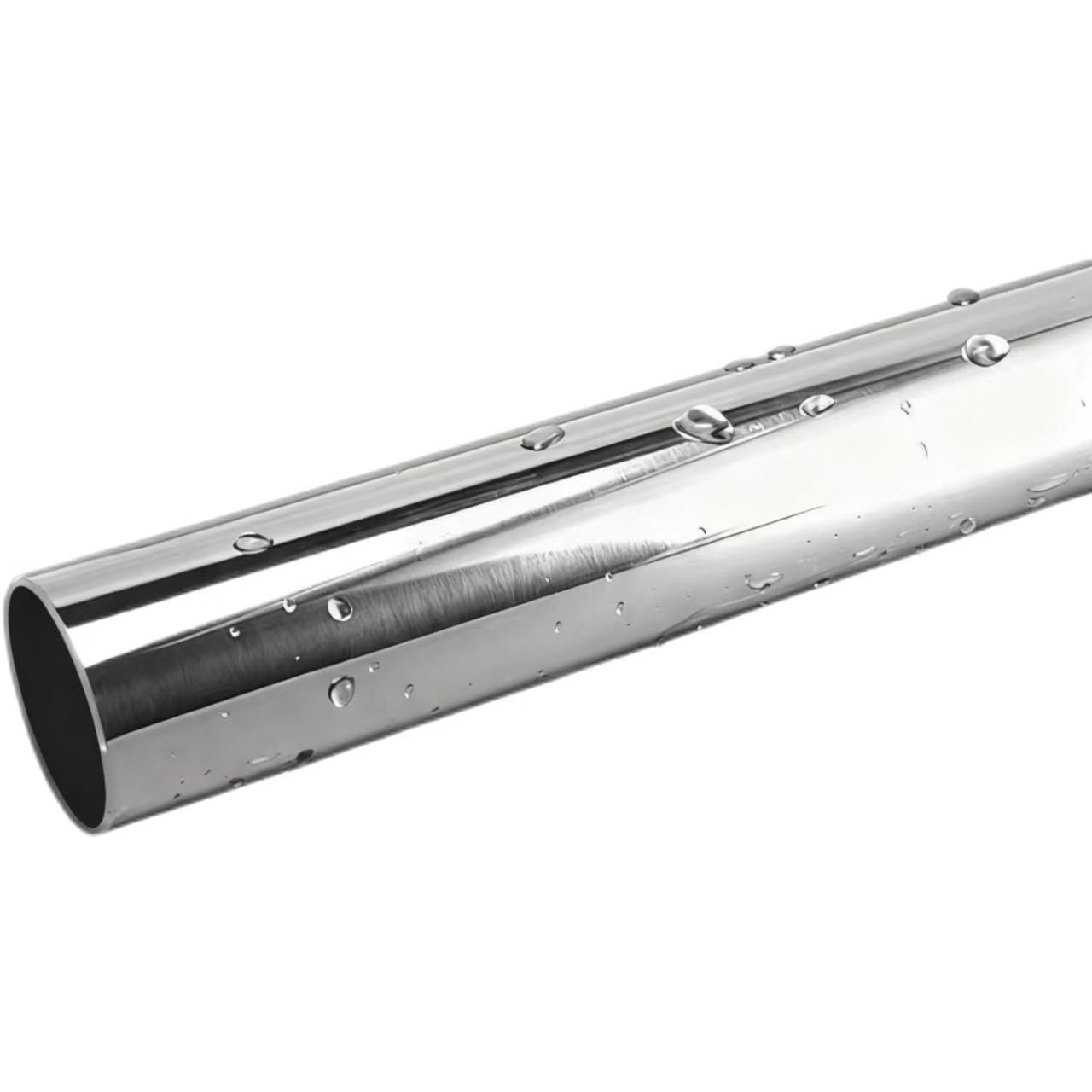
The pipe is not a passive component. Its outside diameter, wall thickness, material properties, roundness, and surface condition all affect how the joint behaves during pressing. Cutting with an unsuitable method can leave burrs, sharp edges, or distortion that interferes with insertion and sealing.
The role of the press tool
A professional press tool applies a controlled deformation to the fitting. The jaw must match the fitting profile, and the tool should be maintained according to its operating instructions. The correct tool does not merely squeeze the connection harder; it produces the intended geometry.
That distinction is important. Excessive force, an incorrect jaw shape, or a poorly maintained tool may produce a joint that appears pressed but does not match the designed profile. Good installation practice therefore treats the tool as part of the engineered connection system.
Why Does the Sealing System Matter?
The sealing element is one of the most important components in a pressed connection because mechanical locking and fluid sealing perform different functions. The fitting body retains the pipe, while the sealing element closes the microscopic path between the mating surfaces.
Material compatibility should be considered from the perspective of the actual service medium, temperature, pressure, cleaning process, and expected operating environment. A sealing compound that performs well with water is not automatically suitable for every chemical, fuel, gas, or process fluid.
Euro Inox notes that different sealing-ring materials are used for different media and that the seal material needs resistance to the conveyed medium. This reinforces a practical specification rule: never select the seal independently from the application.
What happens when the seal is poorly positioned?
A twisted or displaced seal can create an uneven contact pattern. The fitting may still look normal from the outside, yet the sealing interface may not be uniform. This is why visual inspection before pressing is important, especially on repetitive installations where technicians can move quickly from one connection to the next.
Why seal identification systems can help
Some connection systems use visual coding to help installers identify the intended seal category. The exact coding differs among manufacturers. In practice, clear identification can reduce selection errors when several seal materials or service categories are present on the same project.
Which Materials Suit Different Piping Conditions?
Material selection should start with the service environment rather than appearance alone. The fitting, pipe, and sealing element should be evaluated as a compatible system. Corrosion exposure, fluid chemistry, mechanical loading, installation environment, and temperature all influence the appropriate choice.
Stainless steel for demanding fluid environments
Stainless steel is widely associated with pressed piping because it combines formability with corrosion resistance. It can be used in many plumbing, heating, process, and gas applications when the selected grade and complete system are suitable for the service condition.
Its resistance to corrosion can be particularly useful in applications where internal cleanliness, long-term surface stability, or exposure to humid environments matters. However, “stainless steel” should not be treated as a single universal grade. Alloy composition and the actual fluid environment still need to be considered.
Common material groups
| Material Group | Typical Characteristics | Application Considerations | Specification Focus |
|---|---|---|---|
| Stainless Steel | Corrosion-resistant, durable, suitable for controlled press deformation | Water, heating, process services, selected gas and industrial systems | Grade, medium compatibility, pressure, temperature, surface condition |
| Copper | Good formability and established use in plumbing systems | Water, heating, HVAC and compatible service conditions | Tube standard, fitting profile, seal selection, joining tool |
| Carbon Steel | Rigid metallic construction with system-dependent surface protection | Heating, closed-loop systems, selected industrial services | Corrosion protection, wall thickness, coating condition, medium |
| Composite or Specialized Tubes | Application-specific construction with different joining requirements | Selected building and fluid-transfer systems | Tube compatibility, insertion method, seal and approved tooling |
The material group alone does not define service suitability. Always match the complete connection system to the project conditions and applicable technical requirements.
A useful specification should identify the pipe material, fitting material, sealing material, connection profile, nominal diameter, pressure requirement, temperature range, and applicable standard. Leaving one of these undefined can create ambiguity later during purchasing or installation.
Where Are These Connections Used?
Pressed connections are not limited to one building service. The technique can support many fluid and gas systems when the selected product is approved for the application. The central decision is always service compatibility rather than the visual similarity of fittings.
- Domestic Water: Used for hot and cold water distribution where the complete pipe and fitting system is suitable for the intended water service.
- HVAC: Useful for heating, cooling, and related circulation lines where the pressure, temperature, and fluid conditions fall within the system rating.
- Process Water: Can support industrial circulation or utility lines when material compatibility and cleanliness requirements have been evaluated.
- Compressed Air: Suitable systems can provide repeatable mechanical joints for air distribution networks.
- Gas Service: Only systems specifically approved for the relevant gas application should be used, with the correct seal, pipe, tool, and installation procedure.
- Drainage: Certain metallic press systems are used in drainage configurations, depending on the system design and connection requirements.
- Specialty Industrial Lines: Selected systems can be applied to additional liquids or gases when chemical compatibility and pressure requirements are confirmed.
Industry guidance identifies plumbing, heating, process water, chilled water, drainage, gaseous fuels, compressed air, and other specialized services as application areas for stainless-steel press-fit systems, with suitability dependent on the specific design and operating conditions.
Why application classification should come before product selection
Two fittings with the same nominal size can require different seals, pressure ratings, or approval pathways depending on the medium. A water connection and a gas connection may look nearly identical externally while demanding different components and installation controls.
For engineering teams, the correct workflow is therefore application first, system second, component third. This prevents a common mistake: selecting a fitting solely because its dimensions appear compatible.
How Should the Fitting Be Selected?
Selection becomes much easier when the specification is broken into a sequence of measurable requirements. Instead of beginning with a product photograph, begin with the pipeline conditions and work toward the component.
- Define the medium: Identify whether the line carries potable water, heating water, chilled water, compressed air, gas, process fluid, or another medium.
- Define the operating envelope: Record normal and maximum temperature, working pressure, and any transient conditions that could affect the joint.
- Confirm pipe dimensions: Verify nominal size, actual outside diameter, wall thickness, and dimensional tolerance.
- Match the fitting material: Select a material that can tolerate the service environment and any external exposure conditions.
- Select the seal: Confirm compatibility with the conveyed medium and temperature range.
- Confirm connection profile: Make sure the fitting profile and press jaw are an approved combination.
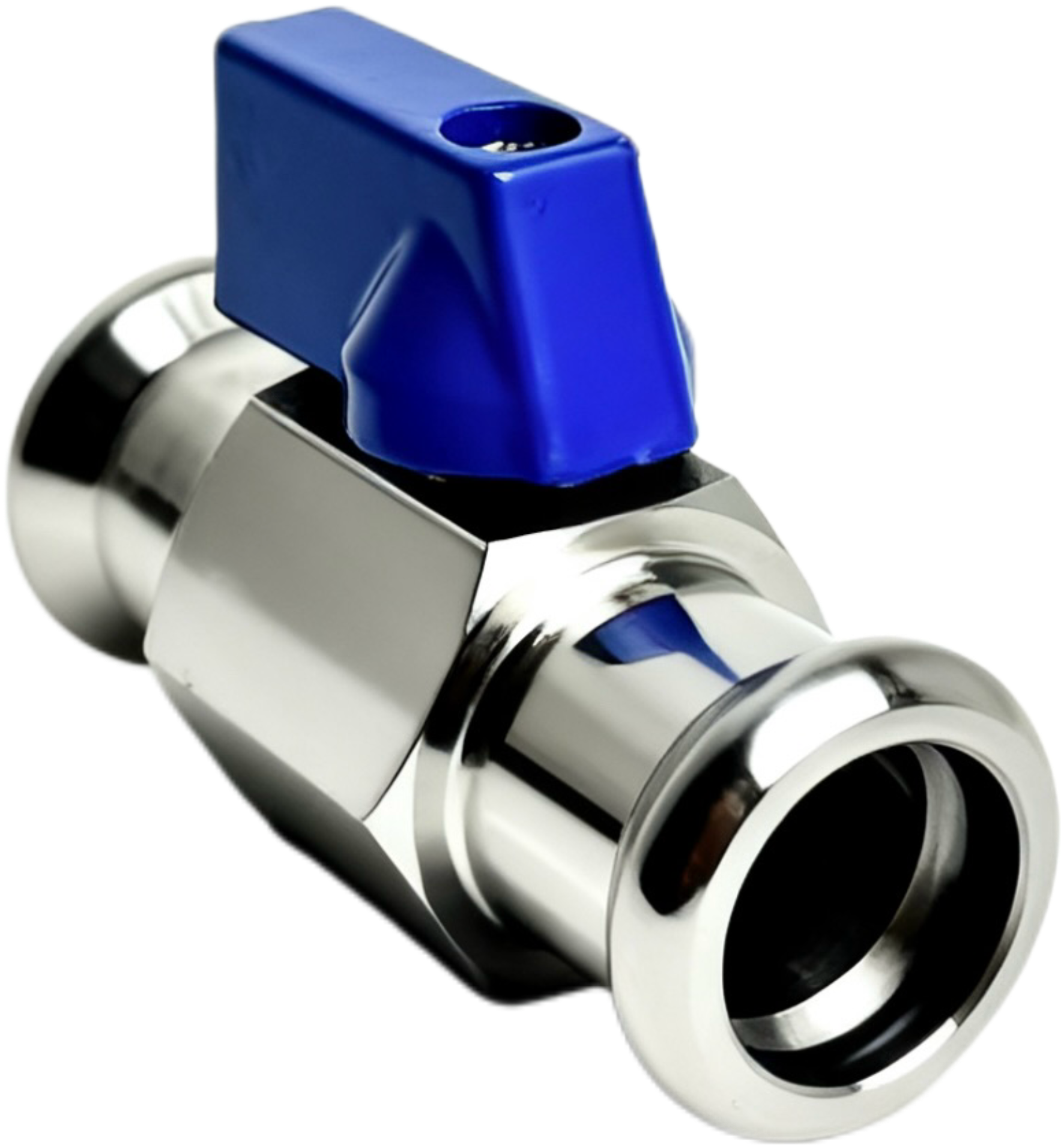
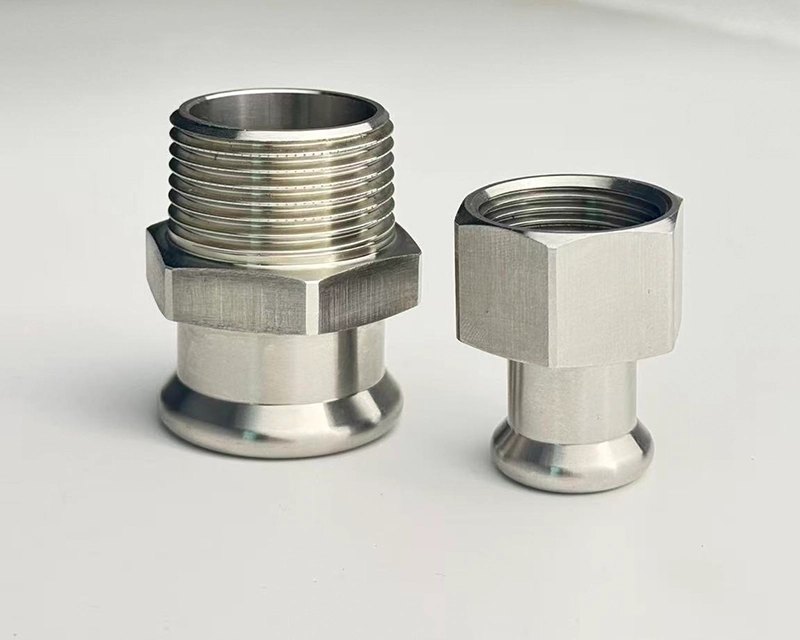
- Check connection interfaces: Review whether the system uses press-to-press, press-to-thread, press-to-valve, or another transition arrangement.
- Check standards and approvals: Match the system to the standards required by the destination market, building code, or project specification.
Example of a product specification range
One commercially listed stainless-steel range in this category covers sizes from 1/8 inch to 4 inches, equivalent to DN6 through DN100, with a stated operating temperature range of −20°C to 120°C and a nominal pressure rating of PN16. The same product information lists ANSI, BS, DIN, ISO, and JIS alignment together with NPT, BSP, BSPT, and DIN thread options. These figures are product-specific and should not be generalized to every pressed piping system.
That distinction matters because the same nominal dimension does not guarantee the same service capability. A fitting rated for one pressure or temperature range may not be suitable when the system conditions change. Published specifications should therefore be read as the limits of the identified product series, not as universal values for the technology.
Choosing between coupling, elbow, tee, reducer, and cap
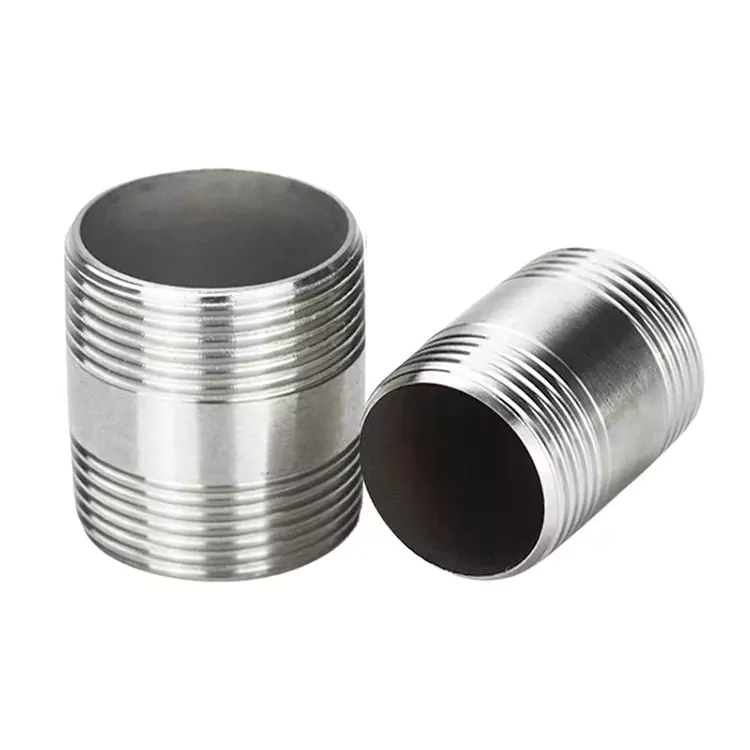
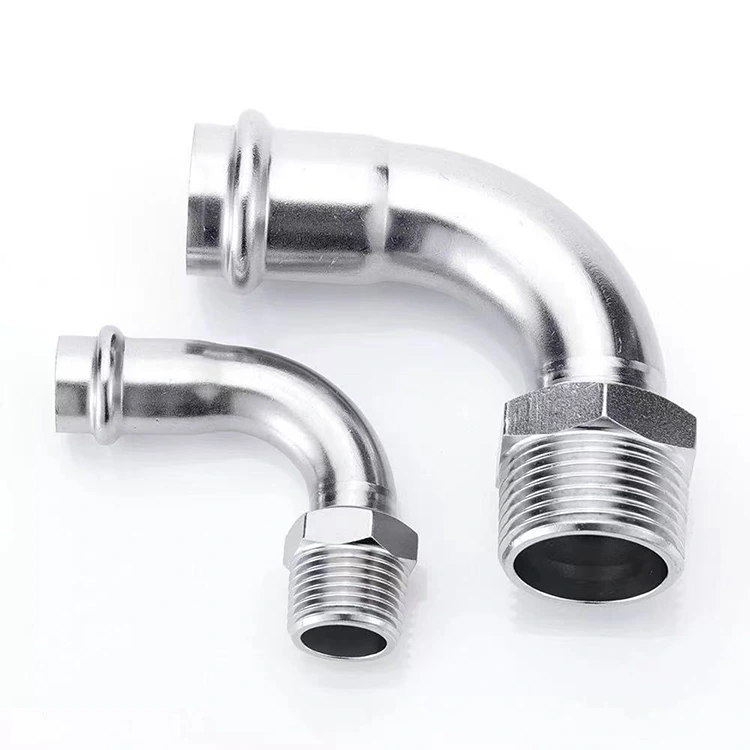
The fitting shape should reflect the function required by the pipeline. A straight coupling joins aligned pipe sections. An elbow changes direction. A tee creates a branch. A reducer transitions between different diameters. A cap closes a pipe end. Specialty adapters may combine several functions, such as changing both direction and connection type.
Using the correct geometry reduces unnecessary routing complexity. It also keeps the system easier to inspect because each component has a clear role in the network.
How Should Installation Be Controlled?
Good installation is the point where engineering design becomes actual joint performance. Even a correctly specified fitting can fail to perform as intended if the pipe end is damaged, insertion depth is wrong, or the pressing tool is mismatched.
Measure and Cut
Cut the tube squarely and maintain a clean, undistorted end suitable for insertion.
Prepare the End
Remove burrs and inspect the surface so the sealing element is not damaged during insertion.
Mark the Depth
Use the specified insertion-depth method to make correct seating visible before pressing.
Insert the Tube
Push the tube into the fitting until it reaches the required position without forcing an unsuitable connection.
Position the Tool
Use the approved jaw or profile and place it at the manufacturer-defined press location.
Complete the Press
Perform the complete press cycle and inspect the finished joint before moving to the next connection.
Why preparation deserves as much attention as pressing
It is tempting to view pressing as the critical moment and everything before it as routine. In practice, pipe preparation has a direct effect on the sealing interface. A burr can scrape the sealing element. An out-of-round tube can make insertion difficult. A contaminated surface can interfere with the intended seating condition.
For this reason, a robust site procedure often includes cut inspection, deburring, seal inspection, insertion-depth confirmation, tool inspection, and final joint verification.
Tool compatibility is not optional
Press tools and jaws are engineered around specific connection profiles. Euro Inox specifically notes that the interchangeable jaws of power tools need to be approved by the fitting manufacturer because the compressed geometry can vary between systems.
This is one of the most important installation controls for contractors working across multiple brands or fitting families. Similar-looking tools do not automatically create identical pressing geometry.
What Installation Mistakes Should Be Avoided?
Most common problems are not caused by a mysterious weakness in the connection principle. They come from small deviations in preparation, compatibility, or process control.
- Wrong fitting-to-pipe combination: Using a dimension that appears similar but does not belong to the same approved system can compromise fit and sealing.
- Incorrect seal: Choosing a seal solely by size while ignoring the conveyed medium can create a compatibility problem.
- Damaged pipe end: Burrs, scratches, distortion, or contamination can interfere with insertion and sealing.
- Insufficient insertion depth: A tube that stops short may not occupy the designed mechanical and sealing zones.
- Wrong press jaw: A visually similar jaw can still produce the wrong deformation profile.
- Incomplete press cycle: The tool must complete the specified pressing sequence instead of being stopped prematurely.
- Skipping inspection: A connection that is not checked immediately is harder to trace later if an issue is discovered during testing.
- Mixing incompatible systems: Combining components from different connection families without explicit approval creates uncertainty around dimensions, profiles, seals, and tooling.
Why “it looks pressed” is not enough
A completed connection should be evaluated against the installation procedure rather than visual appearance alone. Marking or inspection features, correct tube position, proper press profile, and pressure-test results all provide more useful evidence than simply looking at the fitting body.
For repetitive projects, standardized inspection records can also help identify patterns. If several joints show the same deviation, the issue may relate to a tool setting, operator sequence, component batch, or preparation method rather than one isolated fitting.
How Can Joint Quality Be Verified?
Verification should occur at more than one level. The first level is component inspection before assembly. The second is visual and dimensional inspection immediately after pressing. The third is system-level testing under the conditions required by the project specification.
| Inspection Stage | What to Check | Why It Matters | Typical Record |
|---|---|---|---|
| Before Assembly | Pipe size, fitting type, seal, surface condition | Prevents incompatible components from entering the installation sequence | Material and batch check |
| During Assembly | Insertion depth, tool profile, alignment | Confirms that the connection starts from the intended geometry | Installation checklist |
| After Pressing | Press profile, tube position, visible deformation, marking | Provides immediate evidence that the joint followed the process | Visual inspection record |
| System Testing | Pressure or leak testing required by the project | Checks the completed network rather than a single fitting in isolation | Test report |
Factory inspection and site testing serve different purposes. Manufactured components can be tested before shipment, while the completed piping network still requires appropriate installation inspection and commissioning procedures.
Factory quality and site quality are different controls
Factory inspection confirms that manufactured components meet defined production requirements. Site testing confirms that the installed network behaves correctly after cutting, routing, pressing, support installation, and commissioning. Both layers matter because installation introduces variables that do not exist in the factory.
How Does Press Joining Compare With Other Methods?
No connection method is automatically suitable for every pipeline. The right choice depends on the material, service condition, code requirements, available tools, installation environment, and required maintenance strategy.
| Connection Method | Joining Principle | Installation Considerations | Typical Selection Questions |
|---|---|---|---|
| Press Joining | Mechanical deformation with a sealing element | Requires compatible press tooling and controlled preparation | Is the pipe, seal, fitting, and jaw a matched system? |
| Threaded Connection | Interlocking threads create the mechanical interface | Requires correct threading, tightening, and sealing practice | Is the thread standard and sealant suitable for the service? |
| Brazed Connection | Filler metal joins prepared surfaces using heat | Requires controlled heating and appropriate safety measures | Is heat acceptable in the installation environment? |
| Welded Connection | Permanent metallurgical joint created by welding | Requires welding procedure control and qualified practice where applicable | Does the application justify a welded system? |
| Adhesive Joining | Chemical bonding between compatible surfaces | Requires compatible materials, preparation, and curing conditions | Is the cure period and chemical compatibility appropriate? |
The practical lesson is not that one method should replace every other method. Instead, connection technology should be selected according to the actual constraints of the piping system.
What Should a Project Specification Include?
A clear specification prevents the connection from being reduced to a simple product-name request. For procurement, engineering review, and installation, the most useful document connects the fitting to its operating environment.
- Application: Identify the service such as domestic water, HVAC, process fluid, compressed air, or another approved application.
- Pipe Details: State material, nominal size, outside diameter, wall thickness, and applicable dimensional standard.
- Fitting Details: Specify coupling, elbow, tee, reducer, cap, adapter, or other required geometry.
- Seal Details: Define the seal material and service compatibility requirements.
- Operating Conditions: Include working pressure, temperature, fluid characteristics, and any abnormal operating conditions that need review.
- Connection Profile: Identify the required press profile and approved tooling arrangement.
- Thread Interface: Where applicable, define NPT, BSP, BSPT, DIN, or another required thread form.
- Standards: State the required international, regional, or project-specific technical standards.
- Testing: Define inspection points and the final pressure or leak test procedure.
- Traceability: Record batch, material, or identification information where project procedures require it.
Why standardization helps multi-stage projects
Large piping projects often involve engineering, purchasing, warehouse handling, installation, inspection, and commissioning. Each stage can introduce a different interpretation of the same product description. A structured specification keeps the essential technical information visible throughout the process.
It also helps when a project includes several fitting geometries. Instead of handling each elbow, tee, coupling, and adapter as an unrelated item, the team can define the connection system once and then document the individual components within that framework.
How product information should be reviewed
Published specifications should be checked for size range, temperature limits, pressure rating, material, seal options, connection profile, and thread compatibility. Where the application falls near a published limit, a technical review should confirm whether the selected configuration is appropriate rather than relying on a generic category description.
What Makes a Reliable Press Piping System?
Reliability comes from the interaction of several controlled elements rather than from the fitting body alone. A durable piping installation is normally the result of compatible materials, correct dimensions, suitable sealing components, approved tooling, disciplined installation, and documented testing.
The most useful way to think about reliability is as a chain. If each link is controlled, the connection behaves predictably. If one link is ignored, the visual simplicity of the press process can hide a technical problem.
That is why the best installation procedures are not necessarily the longest. They are the ones that identify the few variables that genuinely control joint performance and make those variables easy for technicians to check.
How Can Troubleshooting Be Approached Systematically?
When a piping joint does not behave as expected, the investigation should move from simple installation checks toward broader system conditions. Randomly replacing components can make the problem harder to trace.
Start with the connection sequence
Check whether the correct pipe was used, whether the fitting matches the pipe dimension, whether the seal was correct and undamaged, and whether the pipe reached the required insertion depth. Then verify that the press tool and jaw match the fitting profile.
Then check the application conditions
Review the actual medium, pressure, temperature, and environmental exposure. A joint designed for one service may not be appropriate for another even when the fitting dimensions are identical.
Finally check the whole network
Pipeline supports, movement, vibration, routing constraints, thermal expansion, and adjacent components can influence a connection after installation. Troubleshooting is therefore more effective when the fitting is assessed as part of the complete piping system.
Frequently Asked Questions
What is the basic principle behind a pressed pipe connection?
The pipe is inserted into a fitting containing a sealing element, and a dedicated tool mechanically compresses the fitting around the pipe. The resulting joint combines mechanical retention with sealing around the connection interface.
Does press joining require welding or an open flame?
No. The connection is formed mechanically using a press tool, so the joining operation itself does not require the heat input associated with welding or brazing.
Can any press tool be used with any fitting?
No. Tool and jaw compatibility depends on the connection profile. The fitting and tool combination should follow the applicable manufacturer requirements rather than being selected by appearance alone.
Why is the O-ring or sealing element important?
The sealing element establishes the barrier that limits fluid or gas leakage at the joint. Its material must be compatible with the conveyed medium and the operating temperature range.
What should be checked before pressing the joint?
Check the fitting type, pipe dimensions, seal condition, pipe-end preparation, insertion depth, tool profile, and alignment. These controls help the connection begin from the intended installation condition.
Are pressed fittings suitable for HVAC systems?
Pressed fittings are used in HVAC applications, including heating and cooling circuits, when the selected system is specifically suitable for the fluid, temperature, pressure, pipe material, and project requirements.
Can pressed fittings be used for gas?
Some systems are designed and approved for gas applications, but gas service requires application-specific components, seals, standards, installation procedures, and testing. A general water-service fitting should not automatically be treated as suitable for gas.
What sizes are available?
Available sizes depend on the product family. One published range lists 1/8 inch to 4 inches, or DN6 to DN100. The actual available sizes, pressure range, temperature range, and connection options should be verified for the specific product series.
How does a reducer differ from a coupling?
A coupling normally joins pipe sections of the same intended connection size, while a reducer transitions between different pipe diameters. The fitting shape should match the routing and flow requirements of the system.
What is the most important factor in achieving a reliable joint?
There is no single factor that replaces the others. Reliable performance depends on a compatible pipe, fitting, seal, approved tool profile, correct insertion and pressing procedure, and appropriate system testing.
What Is the Practical Selection Checklist?
Before finalizing a piping connection, the following compact checklist can help turn a general product request into a technically complete specification.
- Medium confirmed: Know exactly what will flow through the line.
- Temperature confirmed: Consider both normal and maximum operating temperature.
- Pressure confirmed: Compare actual service pressure with the selected system rating.
- Pipe confirmed: Verify material, diameter, wall thickness, and dimensional requirements.
- Seal confirmed: Select the sealing material for the service medium and temperature.
- Profile confirmed: Match the fitting profile with the approved press jaw.
- Interface confirmed: Verify press, threaded, valve, or other transition points.
- Standard confirmed: Review the standards and approvals required for the target application.
- Testing confirmed: Establish how finished joints and the completed network will be inspected.
When these items are defined before installation, the selection process becomes much more transparent. It also becomes easier to compare different product configurations without relying on appearance or generic marketing descriptions.
A well-specified connection system should ultimately answer three questions: what medium will pass through it, under what operating conditions, and how will the completed joint be installed and verified?
Need Help Matching the Connection to Your Piping System?
For projects involving pipe size, fitting geometry, thread interface, sealing requirements, operating conditions, or installation compatibility, a detailed specification review can help identify the appropriate configuration before the components are finalized.
Contact us for a tailored specification review and connection solution