
Discover the engineering principles behind detachable threaded connections, including sealing performance, material compatibility, installation practices, operational reliability, and long-term maintenance in modern piping networks.
Abstract
A Union Threaded Fitting provides a practical connection between pipe sections while allowing components to be separated without rotating the entire pipeline. Its reliability depends on much more than thread engagement alone. Material selection, sealing geometry, dimensional compatibility, installation alignment, fluid characteristics, and maintenance procedures collectively determine how effectively the connection performs. This technical guide examines the principal features of detachable threaded unions, explains common performance challenges, and outlines engineering practices that support secure assembly, controlled leakage prevention, and reliable operation in plumbing, heating, water distribution, and suitable industrial fluid-handling systems.
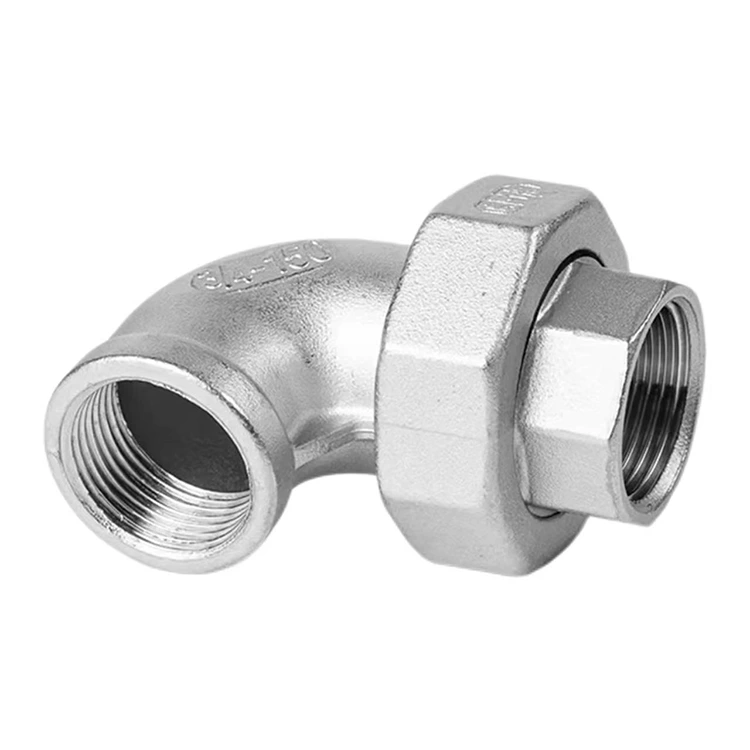
Table of Contents
Explore the technical topics below. Select any section to jump directly to its detailed explanation.
- Understanding Detachable Pipe Connections
- Core Components and Mechanical Design
- How Reliable Sealing Is Achieved
- Choosing Appropriate Materials
- Thread Standards and Compatibility
- Common Configurations and Applications
- Installation Best Practices
- Pressure and Temperature Considerations
- Inspection and Preventive Maintenance
- Troubleshooting Connection Problems
- Engineering Selection Checklist
- Frequently Asked Questions
- Final Engineering Insights
1. Understanding Detachable Pipe Connections
Piping networks depend on secure joints to transport water, heating fluids, and other compatible media between equipment and distribution points. Although permanent connections are appropriate for many installations, certain locations require repeated access for inspection, cleaning, equipment replacement, or system modification.
A detachable threaded union addresses this requirement through a mechanical arrangement that joins two pipe ends with a separately operated retaining nut. When access becomes necessary, the nut can be loosened and the mating components separated without requiring the adjoining pipe sections to rotate.
This feature becomes especially valuable where rigid pipework, closely spaced equipment, or restricted installation clearances make conventional threaded disassembly difficult.
Why Standard Threaded Connections Can Be Restrictive
Conventional threaded couplings typically require relative rotation between the connecting parts. That requirement may become impractical after a complete piping arrangement has been installed and restrained by supports, valves, or equipment connections.
A union connection provides an additional separation point, improving accessibility without introducing unnecessary movement into the surrounding pipe network.
2. Core Components and Mechanical Design
Understanding the internal arrangement of a threaded union helps installers identify correct assembly procedures and recognize potential failure points before commissioning.
Although configurations vary, a typical construction includes two connecting ends, a union nut, mating sealing surfaces, and potentially a dedicated gasket or elastomeric seal.
Connection Ends
The two ends provide interfaces to adjoining pipes, valves, or equipment. Their thread profile, diameter, material, and connection orientation must match the surrounding installation.
Union Nut
The nut draws the mating components together and maintains the mechanical engagement required for the intended sealing arrangement.
Sealing Interface
Depending on the design, sealing may occur through complementary metal surfaces, an elastomeric gasket, or another specifically engineered contact interface.
Sealing Element
Where fitted, a gasket or sealing ring compensates for controlled surface irregularities and creates a barrier against fluid migration when correctly compressed.
Why Geometry and Alignment Matter
The union nut must engage smoothly while the mating faces remain correctly aligned. Misalignment can create uneven compression, concentrated mechanical loading, or damage to the sealing surfaces.
Precision machining helps maintain consistent dimensions, but installation quality remains essential. Even a correctly manufactured component can leak when attached to distorted, incompatible, or poorly supported pipework.
3. How Reliable Sealing Is Achieved
A dependable Union Threaded Fitting relies on a compatible sealing interface, suitable contact pressure, and careful assembly. External thread engagement and the internal union seal perform different mechanical functions, and they should not be treated as interchangeable.
Contact Pressure and Sealing Integrity
The union nut generates the axial force that holds mating components together. In designs using a gasket, this force compresses the sealing material into the intended interface. In metal-seat designs, carefully manufactured mating surfaces establish the required contact.
Insufficient tightening can leave gaps or inadequate gasket compression. Excessive tightening may deform softer components, damage threads, distort sealing faces, or permanently compress an elastomer beyond its intended range.
The Role of Gasket Compatibility
Elastomeric seals must remain compatible with the transported fluid and the expected operating conditions. Temperature, pressure, chemical exposure, compression, and aging can influence their performance over time.
EPDM is commonly used for suitable water and heating applications, while other service environments may require different sealing materials. Compatibility should always be checked against the actual medium rather than assumed from appearance or general material descriptions.
Common Contributors to Leakage
- Incorrect alignment: Uneven contact between mating sealing surfaces.
- Contamination: Debris, scale, or particles trapped at the joint interface.
- Gasket damage: Cuts, deformation, hardening, or unsuitable seal dimensions.
- Thread mismatch: Incompatible thread profiles or improperly engaged components.
- Mechanical movement: Vibration, unsupported pipe loads, or thermal expansion stress.
- Improper tightening: Assembly force outside the manufacturer's recommended range.
4. Choosing Appropriate Materials
Material selection influences corrosion resistance, mechanical durability, dimensional stability, and compatibility with the transported medium. The correct choice depends on the complete operating environment rather than a single material property.
Brass Connections
Brass is frequently used in plumbing and building-service connections because it offers good machinability and practical corrosion resistance in many compatible water-service environments.
Nevertheless, water chemistry and alloy composition matter. Certain environments can promote dezincification or other corrosion mechanisms. Potable-water installations may also require specific material approvals depending on local regulations.
Stainless Steel Connections
Stainless steel provides useful corrosion resistance across many engineering environments. Common grades include SUS304 and SUS316L, although neither should be considered universally resistant to every fluid or exposure condition.
SUS316L contains molybdenum and generally offers improved resistance to certain chloride-related corrosion conditions compared with standard SUS304. However, concentrated chlorides, high temperatures, crevices, and other aggressive conditions can still cause localized corrosion.
| Material | Typical Advantages | Key Considerations | Potential Applications |
|---|---|---|---|
| Brass | Good machinability and practical performance in compatible water systems. | Alloy composition, water chemistry, dezincification resistance, and approvals. | Plumbing, heating connections, and building water distribution. |
| SUS304 | Strong mechanical performance and corrosion resistance in many general environments. | Chloride exposure, operating temperature, and crevice conditions. | Suitable water and industrial service connections. |
| SUS316L | Improved resistance to certain aggressive conditions compared with SUS304. | Actual chemical compatibility and localized corrosion risks. | Selected industrial and demanding water-handling systems. |
Material Compatibility Beyond the Fitting Body
The fitting body is only one part of the connection. Gaskets, adjoining pipes, valves, and sealing compounds must also be suitable for the intended medium.
Engineers should additionally consider galvanic interactions between dissimilar metals, especially in systems containing conductive fluids. Proper design and material pairing help reduce the likelihood of premature deterioration.
5. Thread Standards and Compatibility
Thread compatibility is essential to connection reliability. Similar-looking threaded components may use different profiles, pitches, or sealing principles and therefore may not be safely interchangeable.
Understanding Common Thread Families
NPT threads are widely encountered in North American piping applications. BSPP and BSPT thread forms are also common internationally, with different dimensional and sealing characteristics.
Parallel and tapered threads must be distinguished. Some thread systems are designed to develop a seal through specified thread engagement with an appropriate sealing method, while others depend on a separate gasket, washer, or mechanical sealing surface.
| Thread Designation | General Characteristics | Typical Sealing Principle | Installation Consideration |
|---|---|---|---|
| NPT | Tapered pipe thread commonly used in North America. | Thread engagement with a suitable specified sealing method. | Verify nominal size, profile, engagement, and sealant requirements. |
| BSPT | Tapered pipe-thread family commonly used internationally. | Pressure-tight threaded joint with an appropriate sealing method. | Confirm mating thread designation and dimensional compatibility. |
| BSPP | Parallel pipe-thread family. | Often uses a dedicated washer, gasket, or seating arrangement. | Identify the actual sealing surface before assembly. |
A nominal pipe size alone does not establish interchangeability. Threads should be verified through engineering drawings, applicable standards, and component specifications.
Never force mismatched thread types together. Apparent initial engagement can conceal a dimensional mismatch that compromises thread strength or sealing integrity.
6. Common Configurations and Applications
Different piping layouts require different connection geometries. Straight unions, elbows, tees, and mixed-end arrangements offer flexibility when designing accessible and maintainable systems.
Straight Threaded Unions
Straight configurations connect components along the same pipeline axis. They are useful near valves, pumps, meters, filtration equipment, and other locations requiring occasional disconnection.
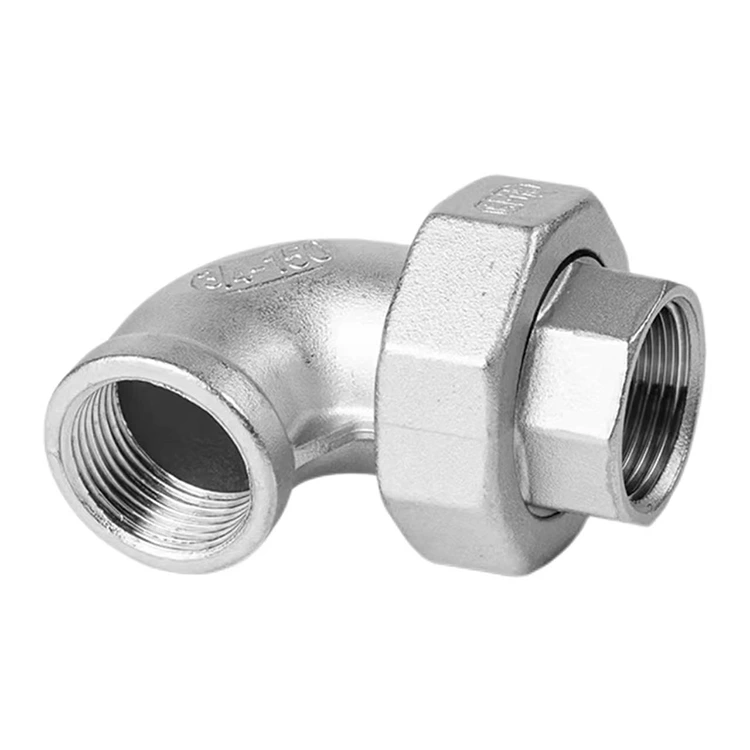
Union Elbows
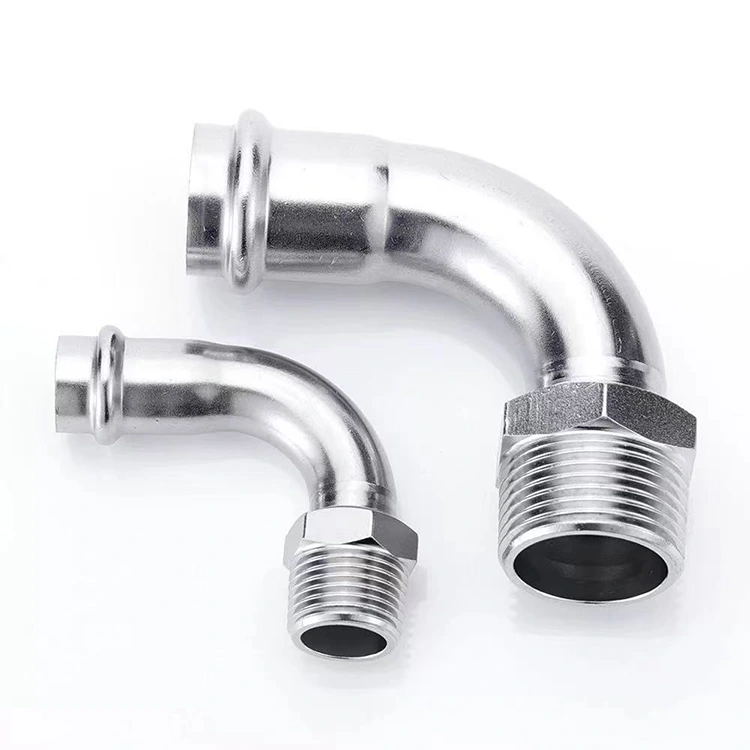
Elbow designs provide a directional change while maintaining a detachable connection. They can be useful where pipe routing requires a bend close to a serviceable component.
Female Threaded Union Tees
Tee configurations create branch connections within distribution networks. Their suitability depends on dimensional compatibility, available clearance, flow requirements, and the particular union arrangement used.
Mixed Male and Female Connections
Male-to-female configurations help connect components having different thread orientations. Such products can simplify certain connection layouts, provided the thread standards and sealing methods match.
Integrated-Gasket Designs
Some union designs incorporate a pre-positioned sealing element. This can reduce the likelihood of a separate gasket being misplaced during assembly. Nevertheless, installers must inspect the seal and verify that it remains correctly seated.
Building Water Systems
Detachable connections facilitate access to selected valves, distribution components, and service equipment.
Heating Networks
Suitable union configurations can accommodate maintenance access around pumps, equipment, and heat-distribution assemblies.
Industrial Fluid Handling
Compatible materials and verified ratings support selected process connections requiring planned disassembly.
Equipment Interfaces
Unions allow equipment to be separated from adjoining pipework after appropriate isolation and depressurization.
7. Installation Best Practices for Secure Connections
Installing a Union Threaded Fitting correctly requires attention to cleanliness, alignment, sealing arrangements, tightening procedures, and system verification. The sequence below outlines general good practice; product-specific instructions take precedence.
- Confirm the connection specification: Check nominal dimensions, thread designations, body material, seal material, pressure rating, and permitted operating temperature before beginning.
- Inspect the components: Examine threads, nuts, mating faces, and gaskets for cracks, deformation, contamination, burrs, or transport damage.
- Prepare the pipework: Ensure pipe ends are appropriately supported and aligned. Avoid using the union connection to pull substantially misaligned pipes together.
- Apply the correct sealing method: Use only the gasket or thread-sealing approach specified for the particular connection interface.
- Start the threads by hand: Engage the connection carefully to reduce the risk of cross-threading and damage to mating parts.
- Tighten according to instructions: Use suitable tools and manufacturer-recommended tightening procedures. Avoid uncontrolled force or unnecessary extension handles.
- Verify alignment and support: Confirm that the completed connection is not carrying avoidable bending loads from adjacent pipes or equipment.
- Perform appropriate system testing: Follow the approved commissioning procedure for the relevant piping service, including controlled pressurization and leakage inspection.
Why Cross-Threading Must Be Prevented
Cross-threading occurs when mating threads engage at an incorrect angle or with incompatible geometry. Continued tightening can permanently damage the connection and prevent reliable assembly.
If unexpected resistance occurs during initial engagement, stop and inspect the components. Force should never substitute for correct alignment or dimensional compatibility.
Commissioning After Assembly
Pressure testing must be performed using an approved procedure appropriate to the medium, installation, and applicable code requirements.
Testing should confirm that the assembly remains mechanically stable and free from observable leakage under the specified conditions. Additional inspection may be required after thermal cycling or the initial operating period.
8. Pressure, Temperature, and Operating Conditions
Connection performance must be evaluated against actual service conditions rather than nominal descriptions alone. Both the fitting body and its sealing system must remain suitable throughout normal operation and foreseeable operating variations.
Understanding Published Operating Specifications
Product information for selected threaded unions includes brass, SUS304, and SUS316L construction, EPDM sealing options, nominal sizes from 1/8 inch through 4 inches, a stated PN16 rating, and a published temperature range of -20°C to 120°C.
These figures describe the manufacturer's stated product range, not a universal operating envelope for every variation or assembly. Actual suitability must be verified for the selected product, gasket, medium, and applicable pressure-temperature conditions.
How Thermal Cycling Influences Connections
Heating and cooling cause pipework to expand and contract. Different materials may respond at different rates, creating additional mechanical loading near restrained connections.
Repeated movement can influence gasket compression, alignment, and joint stability. Appropriate pipe supports, expansion provisions, and material selection help control these effects.
Vibration and Dynamic Loading
Pumps, compressors, and rapidly operating valves can introduce vibration or pressure transients. Such effects may exceed the conditions represented by steady-state operating pressure alone.
Where dynamic loading is significant, engineers should evaluate mechanical restraint, fatigue exposure, surge control, and the suitability of the particular union design.
- Working pressure: Verify the permitted rating for the actual temperature and configuration.
- Fluid compatibility: Evaluate the body, gasket, and adjoining materials together.
- Thermal movement: Provide suitable allowance for system expansion and contraction.
- Mechanical loading: Prevent excessive bending, vibration, and unsupported equipment weight.
- Applicable standards: Follow relevant design, installation, testing, and inspection requirements.
9. Inspection and Preventive Maintenance
The ability to disconnect a union does not mean that it should be repeatedly opened without inspection. Each disassembly presents an opportunity to examine thread condition, sealing integrity, and the surrounding pipe arrangement.
Routine Visual Inspection
Regular inspections should look for moisture, deposits, discoloration, corrosion, looseness, and unexpected pipe movement near the connection. The appropriate inspection interval depends on service criticality and operating conditions.
Early signs of seepage can include mineral deposits, staining, or localized dampness. However, the absence of visible fluid does not guarantee that a connection is suitable for every operating condition.
Gasket Inspection and Replacement
When the joint uses a replaceable gasket, examine it for flattening, swelling, cracking, cuts, hardening, or other deterioration.
Gasket reuse should only be considered when permitted by the manufacturer's instructions. A previously compressed seal may not recover sufficiently to provide reliable performance after reassembly.
Cleaning and Reassembly
Clean mating surfaces with suitable materials that do not scratch sealing faces or damage protective surfaces. Remove foreign particles carefully and inspect the threads before attempting reassembly.
Where corrosion, galling, thread deformation, or sealing-face damage is present, determine whether the affected component requires replacement. Avoid improvised repairs that alter the engineered sealing geometry.
10. Troubleshooting Common Connection Problems
A structured diagnostic approach is more effective than repeatedly tightening a leaking connection. The first step is to identify where fluid is escaping and determine whether the issue originates from the pipe-thread interface, union seat, gasket, or another nearby component.
| Observed Problem | Possible Cause | Recommended Inspection |
|---|---|---|
| Seepage at the union interface | Damaged gasket, contaminated sealing face, or incorrect compression. | Isolate the system and inspect the gasket and mating surfaces. |
| Leakage at the pipe threads | Thread mismatch, damaged threads, or inappropriate sealing method. | Verify thread designation, condition, and specified sealing procedure. |
| Difficulty engaging the nut | Misalignment, thread damage, debris, or incompatible components. | Inspect alignment and thread geometry without applying excessive force. |
| Recurring leakage after thermal cycles | Thermal movement, unsuitable gasket, or inadequate pipe support. | Evaluate temperature exposure, restraint, and sealing-material compatibility. |
| Visible corrosion | Environmental exposure, incompatible medium, or galvanic interaction. | Review material selection, water chemistry, and installation conditions. |
| Damage during disassembly | Galling, excessive tightening, contamination, or improper tools. | Inspect threads and mating components; replace damaged parts as required. |
Why Repeated Tightening Is Not a Complete Solution
Additional tightening cannot reliably repair a damaged sealing face, incompatible gasket, or incorrect thread connection.
In some cases, excessive force can make the original problem worse by deforming components or creating permanent mechanical damage.
Troubleshooting should identify the underlying cause and restore the specified connection condition before the system returns to operation.
11. Engineering Selection Checklist
Selecting a Union Threaded Fitting requires matching the connection's geometry, materials, and operating limitations to the complete piping system. A structured review can prevent compatibility issues before installation begins.
- Connection geometry: Determine whether a straight, elbow, tee, or mixed-end arrangement is required.
- Nominal dimensions: Verify size, installation clearance, and pipe compatibility.
- Thread designation: Confirm thread type, pitch, profile, and applicable dimensional standard.
- Body material: Match corrosion resistance and mechanical properties to the service environment.
- Seal material: Confirm compatibility with the medium, temperature, and planned maintenance procedure.
- Operating limits: Verify pressure and temperature suitability under actual service conditions.
- Mechanical support: Evaluate vibration, pipe expansion, alignment, and external loading.
- Maintenance access: Confirm sufficient clearance for inspection, tools, and component removal.
- Testing requirements: Establish the applicable commissioning and inspection procedures.
- Documentation: Request applicable technical drawings, product specifications, and material information.
Questions to Resolve Before Final Selection
Is the connection intended for potable water, heating water, or another compatible medium? Will the system experience frequent thermal changes or mechanical vibration? Does the installation require access for planned maintenance?
The answers influence the connection design, material selection, gasket arrangement, and installation approach.
Where operating conditions are unusual or technically demanding, confirm the proposed configuration directly with the manufacturer and the responsible piping engineer.
12. Frequently Asked Questions
Select a question to expand the answer and explore practical details about threaded union connections.
What is the main advantage of a threaded union over a standard coupling?
A threaded union permits disassembly at the union interface without requiring the connected pipes to rotate. This makes maintenance and equipment access easier in suitable piping arrangements.
Can a threaded union be reused after disassembly?
Many union bodies are designed for repeated assembly and disassembly when their components remain undamaged. However, seals may require replacement, and reuse must follow the manufacturer's specific instructions.
Are stainless steel unions always better than brass unions?
No. Material suitability depends on fluid chemistry, temperature, mechanical loading, corrosion exposure, applicable approvals, and adjoining components. Both brass and stainless steel can perform well in properly matched applications.
Is thread sealant required on every union connection?
No. The required sealing method depends on the connection design. Some pipe-thread interfaces require an approved sealant, while union faces may rely on a dedicated gasket or engineered sealing seat. Unnecessary sealant should not be applied to these surfaces.
How can an installer prevent damage during tightening?
Confirm thread compatibility, align the components correctly, begin engagement by hand, use appropriate tools, and follow the specified tightening method. Stop immediately if resistance suggests cross-threading or misalignment.
Can these connections be used in heating systems?
Suitable threaded unions are commonly used in heating applications. The chosen configuration must have appropriate pressure and temperature ratings, compatible sealing materials, and sufficient allowance for thermal expansion.
What causes leakage after repeated heating and cooling?
Possible causes include gasket aging, changes in sealing compression, pipe movement, thermal expansion stress, or insufficient mechanical support. The connection should be inspected under safe, isolated conditions.
How often should a union connection be inspected?
Inspection frequency depends on operating conditions, service criticality, system history, and applicable maintenance requirements. High-vibration or frequently cycled systems may require closer monitoring than stable, accessible installations.
Are NPT and BSP threads interchangeable?
They should not be assumed interchangeable. Their thread geometry and specifications differ. The correct matching designation and compatible sealing arrangement must be verified before assembly.
What information should be supplied for technical product evaluation?
Provide the required nominal size, connection orientation, thread standard, body material, sealing preference, operating medium, working pressure, temperature range, and any relevant installation constraints. These details support a more accurate technical assessment.
13. Final Engineering Insights
Reliable threaded union connections result from the interaction of sound mechanical design, appropriate materials, correct installation, and consistent maintenance. No individual feature can substitute for compatibility across the complete piping assembly.
Accurate thread matching prevents unnecessary engagement damage. Suitable sealing components establish the intended fluid barrier. Correct alignment and tightening maintain mechanical stability, while appropriate pipe support reduces avoidable loads.
Maintenance planning is equally important. A connection intended for disassembly should remain accessible, inspectable, and straightforward to reassemble using approved procedures.
Engineers evaluating product options should prioritize verified specifications, suitable pressure-temperature performance, fluid compatibility, and dimensional consistency. These factors provide a stronger foundation for reliable operation than appearance or general product descriptions alone.
Zhejiang Shenchi Environmental Protection Technology Co., Ltd. offers threaded connection solutions for suitable plumbing, heating, and industrial piping applications. Its product range includes multiple connection configurations and material options designed to address different engineering installation requirements.
Reviewing detailed technical specifications and confirming application requirements helps identify an appropriate connection design for each piping environment.
Need a Reliable Connection Solution for Your Piping Project?
Share your required dimensions, thread standards, operating medium, material preferences, and installation conditions with our technical team. Explore suitable connection configurations and receive guidance tailored to your engineering requirements.
Contact Us for Technical Product Guidance